
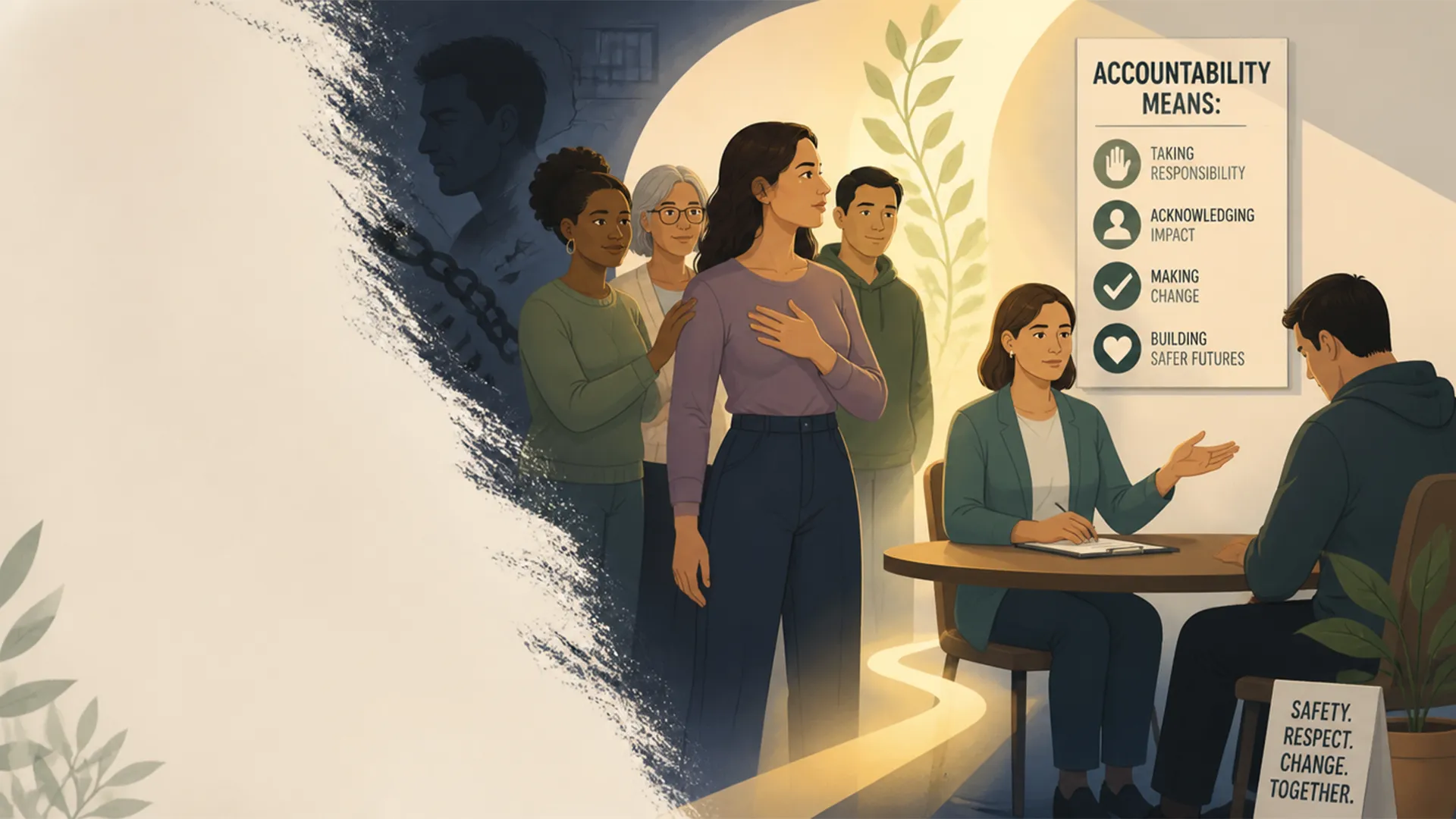
Domestic violence intervention is not only about stopping one harmful moment. It is about helping a person understand the pattern behind that moment. Real change begins when a person stops blaming others and starts looking honestly at their own choices.
Accountability is the foundation of this work. Without it, a person may say sorry, feel bad for a short time, and then repeat the same behavior again. They may blame anger, stress, alcohol, childhood pain, or the other person. But none of those things can replace personal responsibility.
Accountability does not mean a person is hopeless or unable to change. It means the opposite. It means change becomes possible because the person finally begins to tell the truth.
Accountability Begins with Owning the Behavior
The first step in domestic violence intervention is owning the behavior. This means being able to say, “I chose this behavior, and I am responsible for changing it.”
Many people enter intervention programs still focused on what someone else did. They may talk about what their partner said, how angry they felt, how stressed they were, or how they grew up. These things may be part of the story, but they do not remove responsibility.
A person may have grown up around violence. They may have learned unhealthy ways to handle conflict. They may struggle with anger, fear, shame, or pressure. Still, they are responsible for what they do with those feelings.
Owning the behavior means naming it clearly. Threatening is a choice. Yelling to scare someone is a choice. Controlling where someone goes is a choice. Blaming someone after causing harm is also a choice.
When a person can name the behavior honestly, they can begin to change it.
Excuses Keep Harmful Patterns Alive
Excuses are one of the biggest barriers to change. They may sound small, but they keep the person away from the real issue.
Common excuses include:
“I was angry.”
“I lost control.”
“They pushed me.”
“That’s how I grew up.”
“It only happened once.”
These statements may feel like explanations, but they often become a way to avoid responsibility. They shift attention away from the harmful choice and place it somewhere else.
Anger does not make someone abusive. Stress does not make someone threaten another person. Alcohol may lower control, but it does not create responsibility in someone else. A painful childhood may explain where some patterns came from, but it does not excuse harming another person.
When excuses continue, the pattern continues. The person may feel sorry afterward, promise to change, and then return to the same behavior when pressure builds again.
Accountability breaks this cycle. It asks the person to stop saying, “Look what they made me do,” and start asking, “What did I choose to do, and what must I do differently next time?”
Accountability Is Not the Same as Shame
Accountability should be firm, but it should not be built on shame. Shame tells a person, “You are bad, and you cannot change.” Accountability says, “Your behavior caused harm, and you are responsible for changing it.”
This difference matters. Shame often makes people defensive. They may shut down, argue, deny, or attack back. They may feel so focused on protecting themselves that they cannot hear the truth about the harm they caused.
Accountability is different because it keeps the focus on behavior, choices, and repair. It does not ask a person to hate themselves. It asks them to be honest.
A person can feel regret without making excuses. They can accept consequences without giving up. They can understand the harm they caused and still believe they are capable of learning a safer way to respond.
This is why domestic violence intervention must be balanced. It must not soften the harm, but it must also show a path forward. The goal is not empty guilt. The goal is safer behavior.
Group Work Helps People See Their Patterns
Domestic violence intervention programs often use group work because patterns become clearer when people talk, listen, and receive feedback.
A check-in may ask each person to talk about an anger incident or conflict from the week. A discussion may help them look at what happened before, during, and after the incident. Homework may ask them to write down thoughts, feelings, triggers, choices, and consequences.
This kind of work helps participants see that harmful behavior is not always one isolated event. It may be part of a repeated pattern. Maybe they raise their voice when they feel disrespected. Maybe they blame others when they feel ashamed. Maybe they use silence, threats, or control when they feel afraid of losing power.
Group feedback can be hard to hear, but it can also be useful. Other people may notice excuses, minimization, or repeated thinking patterns. The facilitator can guide the discussion back to responsibility and safer choices.
Over time, the person begins to see the pattern more clearly. Once they see it, they have less room to deny it.
Real Change Requires Practice
Accountability is not one apology. It is not one good week. It is not saying the right words after something harmful has happened.
Real accountability is repeated behavior over time.
It means listening without becoming defensive. It means accepting consequences without blaming the person who was harmed. It means learning to pause before reacting. It means using respectful communication instead of threats, control, or intimidation.
It also means repairing where possible, while understanding that repair cannot be forced. The harmed person may need space, boundaries, or safety. Accountability respects that.
Domestic violence intervention teaches that change is possible, but it must be practiced. A person must choose nonviolence when angry. They must choose respect when hurt. They must choose self-control when they want to blame.
That is why accountability matters. It is the place where real change begins, and it is the practice that helps change last.
If you want a deeper, step-by-step guide to accountability, change, and responsible behavior, The 52 Week Batterer’s Intervention & Treatment Program by Joseph E. Snapp, MSW, LCSW, is a powerful resource to explore. This book gives facilitators, counselors, and participants a clear path for understanding harmful patterns, accepting responsibility, and practicing real change over time. It is not just about saying sorry. It is about learning how to live differently, one session at a time.